
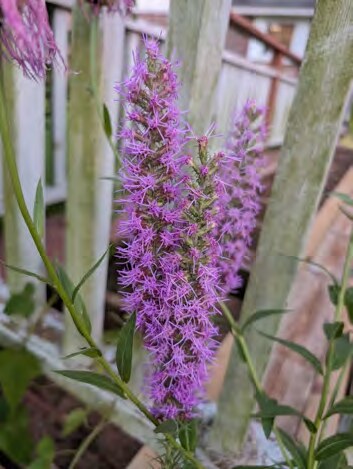
As the Oklahoma summer drags on, your native plant garden can start to look a bit ragged and beaten. The spring and early summer superstars like blanket flower, coreopsis, yarrow, and Mexican hat look past their prime as the brutal heat and wind take their toll. Perhaps it is time for a new actor to come on stage. Might we suggest Liatris pycnostachya, the Prairie Blazing star? There is nothing subtle about the arrival of this native as it takes the stage in late summer, wowing the crowd with foot-long spikes of pinkish-purple flowers hovering over its neighbors.
The audience will love it—and we don’t mean the human audience (though they are important, too). Butterflies, bees, and a wide assortment of other pollinators will arrive, and the sound of their wings will echo through the garden like applause. The show goes on through September, allowing other actors like goldenrods and asters to take the stage. Hummingbirds are big fans of prairie blazing star, and its 4-foot height makes them easy to watch as they flit about the flower spikes.
Prairie blazing star is a member of a large family that has a lot to offer the native plant gardener. It tends to like things a little wetter than most other Liatris, though if you really need a “wet liatris,” we would recommend dense blazing star (L. spicata). It prefers full sun, which enables it to reach its full height and produce longer flower spikes, and it will do so in most soils, even the clay many of us deal with. The famous flower spikes are truly striking plumes of pink-purple color and give it its other common name, gayfeather.
The flowers bloom from the top down, unlike its earlier-blooming and shorter friend, purple prairie clover, which blooms from the bottom up. It is a friendly plant that gets along well with others, and once it is established, it is easily divided by separating the tough roots (called corms) so it can be planted elsewhere or given to a friend. The tall stature and bold presence of prairie blazing star add beauty and structure to any planting. It looks great with many other popular natives, but one favorite combination is pairing it with the yellow flowers of Ratibida pinnata and grasses like little bluestem or sideoats grama, which add texture and support to help prevent flopping.
We hope that you will give Liatris pycnostachya a starring role in your garden. If you need plants or have questions, reach out to one of our great Oklahoma Native Plant Network professional growers. They would be happy to help you.