
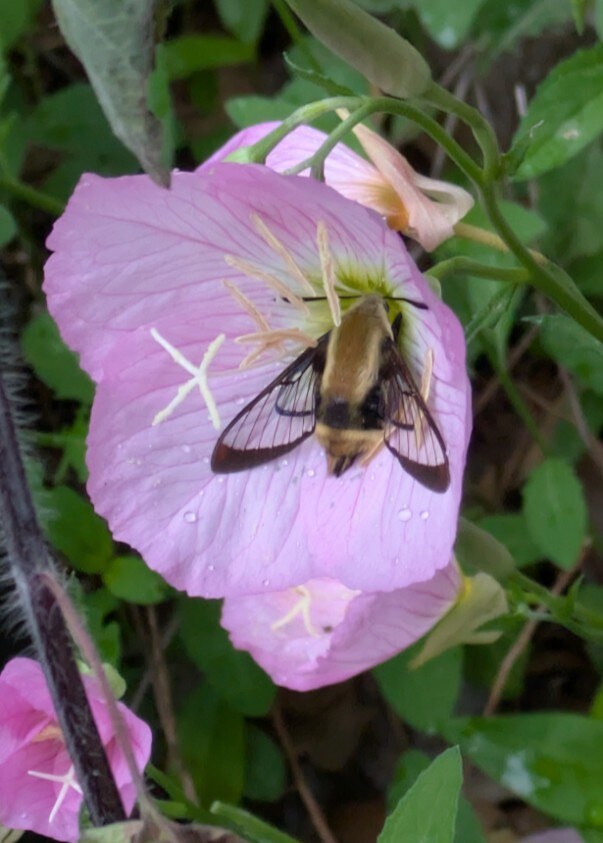
The patch of native pink Evening Primroses (Oenothera biennis) has come alive. Over the years I collected seeds from along Airport Drive in Shawnee to give to my neighbor. The evening primroses spread like wildfire in her yard, but only one or two managed to survive in mine. When the new neighbor purchased the house and lot, we discovered he is a mower. No matter what blooms in spring, it is all cut down.
The rains kept him from chopping everything, and a small group of pink evening primroses grew as fast as they could and even bloomed before he roared through. Take that! For my part, I kept tossing seeds into my flower bed around the watering trough, ever hopeful. Slowly some pink evening primroses have become established on the east side. Bursts of pink are delightful to the eye.
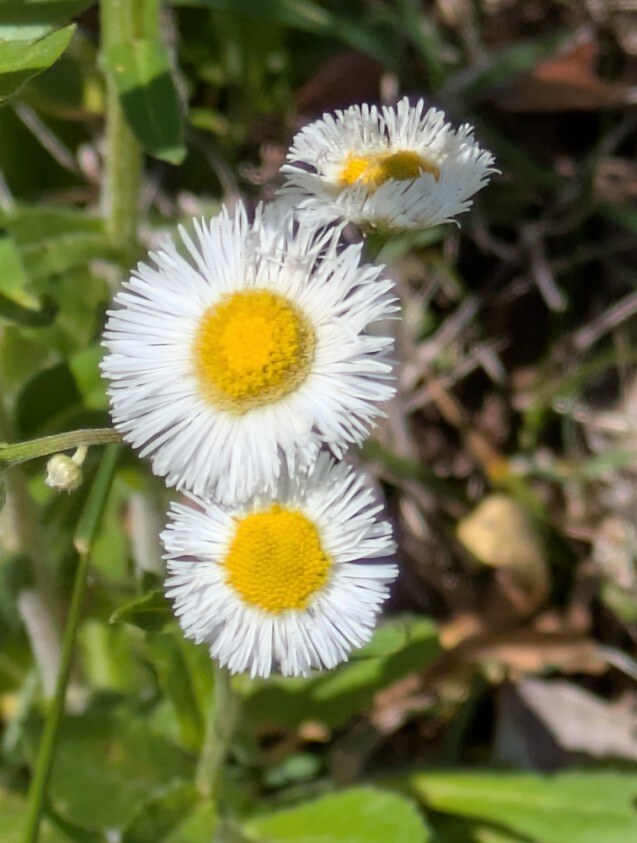
The rains also temporarily saved the beautiful Philadelphia Fleabane (Erigeron philadelphicus) from being mowed by my other neighbor across the street. As they do every year, the fleabanes rose and bloomed in the moist, low area of my neighbor’s partially shaded lawn. She couldn’t get her riding lawnmower in there without getting stuck. I could talk until I was blue in the face about how important was this seasonal wetland area full of wild flowers full of busy bees and butterflies, but when the land dried enough to allow access, she rode in and cut everything down to match the sandbur and Bermuda grass lawn on the other side of her driveway.
Philadelphia fleabane is the earlier spring fleabane. The delicate native can grow over 2 feet tall with flower heads composed of dozens of small florets, each one an inch in size. All look like miniature daisies. The Daisy Fleabane (Erigeron annuus) is later in the season, but thrives in full sun and tolerates drier soils. Over 170 species of fleabanes are found in the US. Countless insects visit for pollen, nectar, foliage, plant juices and other vegetative parts. Rabbits, deer, and livestock munch on the foliage and flower heads.
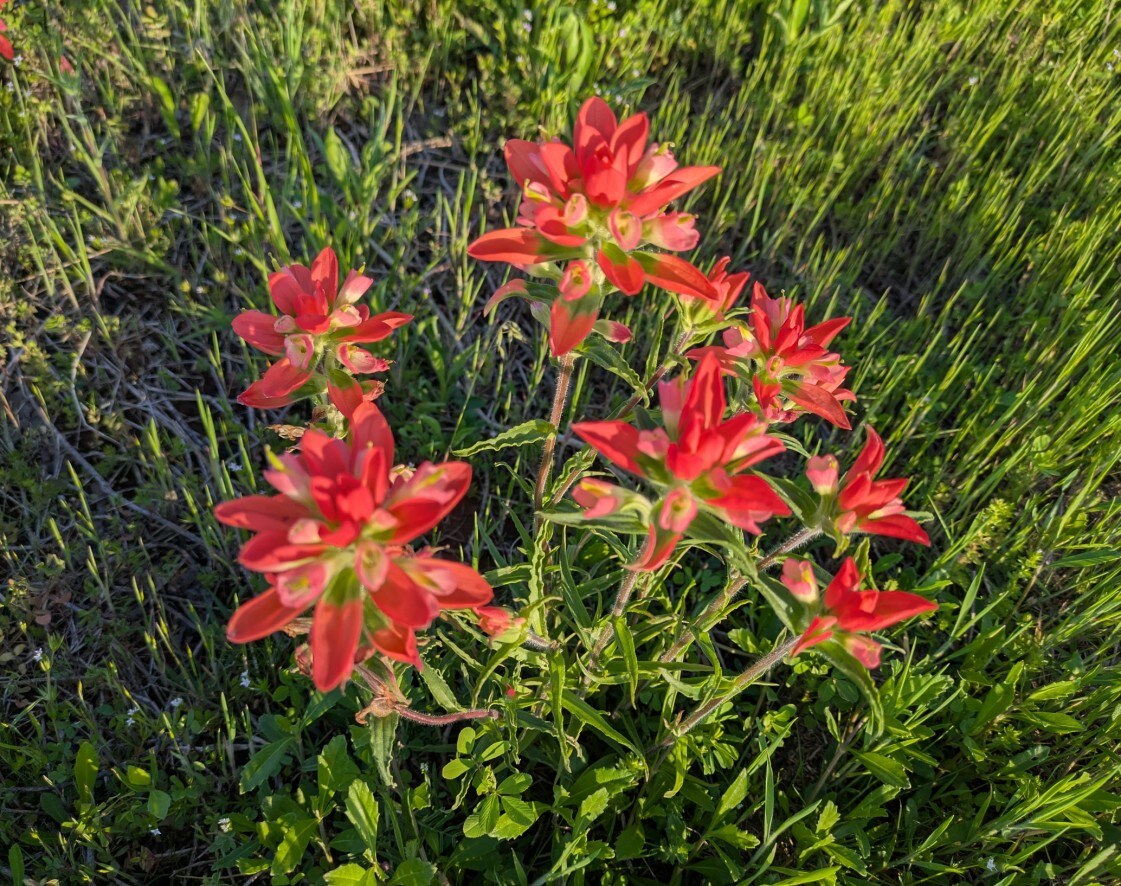
On the edge of the colony of fleabanes was the Indian Paintbrush (Castilleja indivisa). This spring flower stands out in fields, meadows, pastures and roadsides. The paintbrushes are spikes of non-descript flowers with brightly colored bracts, not only in red but yellow and white. Although Indian Paintbrush has green leaves, it and the other 200 plant species in the Castilleja genus are hemiparasitic. These opportunistic plants feed off a diverse range of plants, tapping into the xylem vessels that transport water and nutrients from either branches or roots.
The Indian paintbrushes often associate with grasses and non-woody type vegetation. Pollinators visit the flowers, but the familiar Buckeye butterfly with large eyes on its wings uses the foliage for eggs and caterpillars.
One can make such a difference by not mowing until the flowers have set seed. Wide strips or large sections of wildflowers can be left untouched. One huge reason bird populations are steeply declining is insect numbers are also drastically dropping. Birds either eat or feed their offspring nutritious insects, of which many eat plants.