
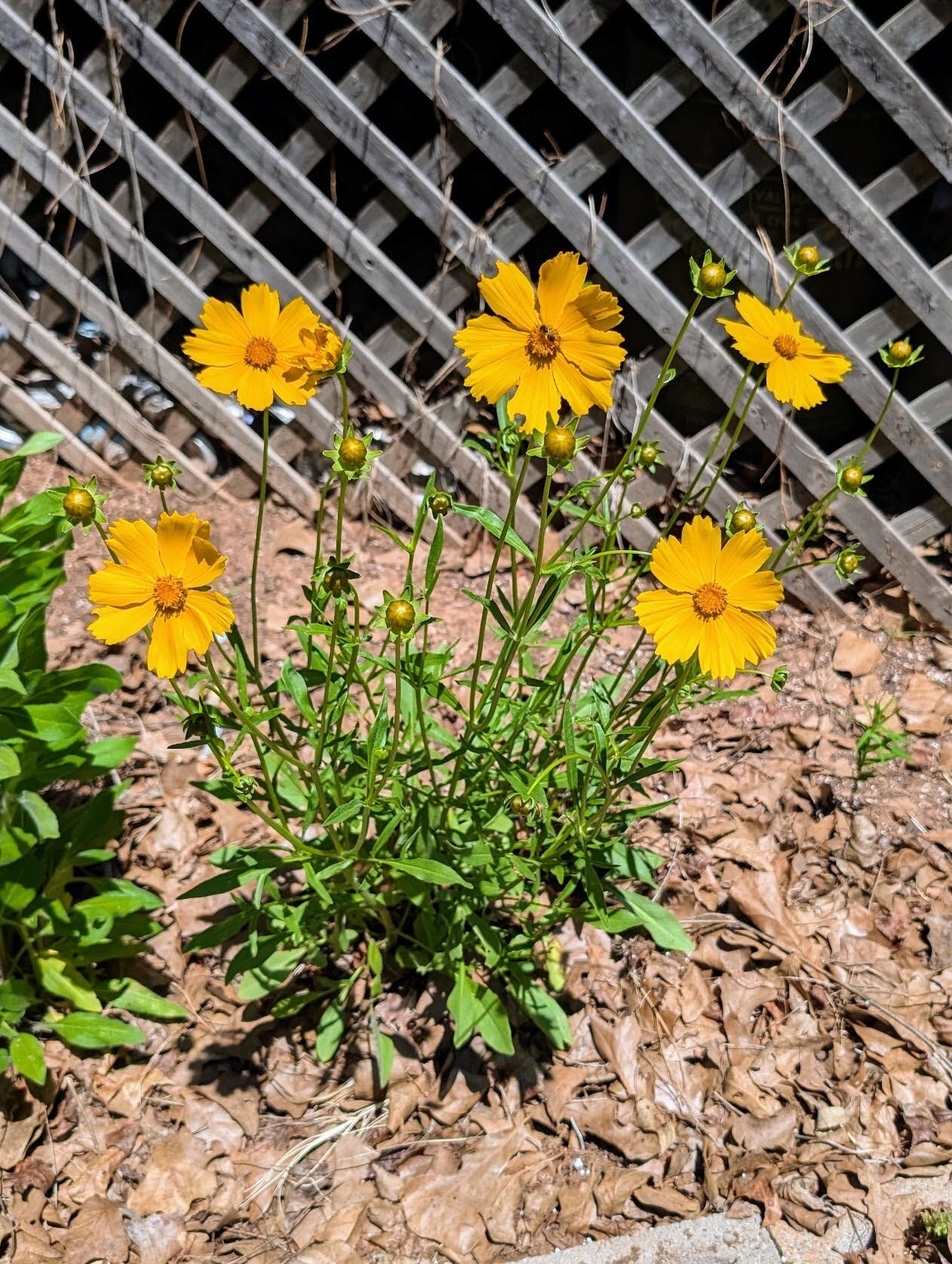
What is a keystone plant? Keystone plants are plant genera that support a disproportionately large amount of life in our ecosystem. In particular, these native plants provide food for hungry caterpillars, which then in-turn are food for hungry birds. They also support specialist-bees, as well as other native insects and pollinators.
The name “Keystone” refers to the wedge-shaped stone at the top of an arch. Without this vital piece, the arch would crumble; much like our ecosystem if these vital plants were eliminated from the landscape.
Trees often support the largest number of insects, especially oak trees, but herbivorous plants are also important. Try including some of the following keystone plants in your landscape:
- Dalea: Prairie Clover
- Gaillardia: Blanketflower
- Helianthus: Sunflowers
- Oenothera: Primrose
- Rudbeckia: Black-eyed Susans
- Symphyotrichum: Asters
- Verbesina: Wingstem/Frostweed
- Coreopsis: Tickseed
Keystone plants, provide the most bang-for-your-buck when it comes to your local food web. Although they only represent 14 percent of plants, they provide 90 percent of the caterpillars needed by birds, especially hungry baby birds, for food. Even in a small space, adding a few keystone plants can help support the greatest amount of wildlife.
According to the Xerces Society, in the central United States about 30 percent of the approximately 1,800 native bee species are pollen specialists. This means they will only be able to complete their life cycle using pollen from a very narrow range of native plants. Keystone plants support the largest number of these pollen specialists.
In addition to specialist bees, caterpillars can also be quite picky eaters. The vast majority of plant-feeding insects, including caterpillars, are specialists. This means they can only digest plant material from a limited number of plants usually corresponding with a specific family or genus. The good news is, if you support the specialists, you also supply food for generalist insects.
Keystone plants are organized by eco-region, and for Oklahoma that means the Great Plains and Eastern Temperate Forests. The National Wildlife Federation keeps a full list of keystone plants by eco-region.